
Decoding Car Transmission Slipping: What's Really Happening
A car transmission is a complex system. When it starts slipping, it's a clear sign something isn't right. Think of your transmission as a sophisticated collection of gears, working in harmony to transfer power from your engine to your wheels. When everything's working correctly, this power transfer is smooth, resulting in seamless acceleration and gear changes.
However, when your transmission slips, this vital connection is disrupted. This means the engine's power isn't fully reaching the wheels, resulting in several noticeable symptoms.
Understanding the Mechanics of Slipping
Transmission slipping happens when the clutches inside the transmission fail to engage the gears properly. Imagine a slipping bicycle chain – the pedals are moving, but the bike isn't going anywhere efficiently. In a car, this translates to the engine revving higher than usual without a corresponding increase in speed.
This can be caused by several issues, from low transmission fluid to worn-out clutch plates or bands. Problems with the torque converter, which connects the engine to the transmission, can also contribute to slipping.
The infographic below illustrates the key differences between a normal transmission and a slipping one, comparing shift response time, fluid operating temperature, and estimated repair costs.
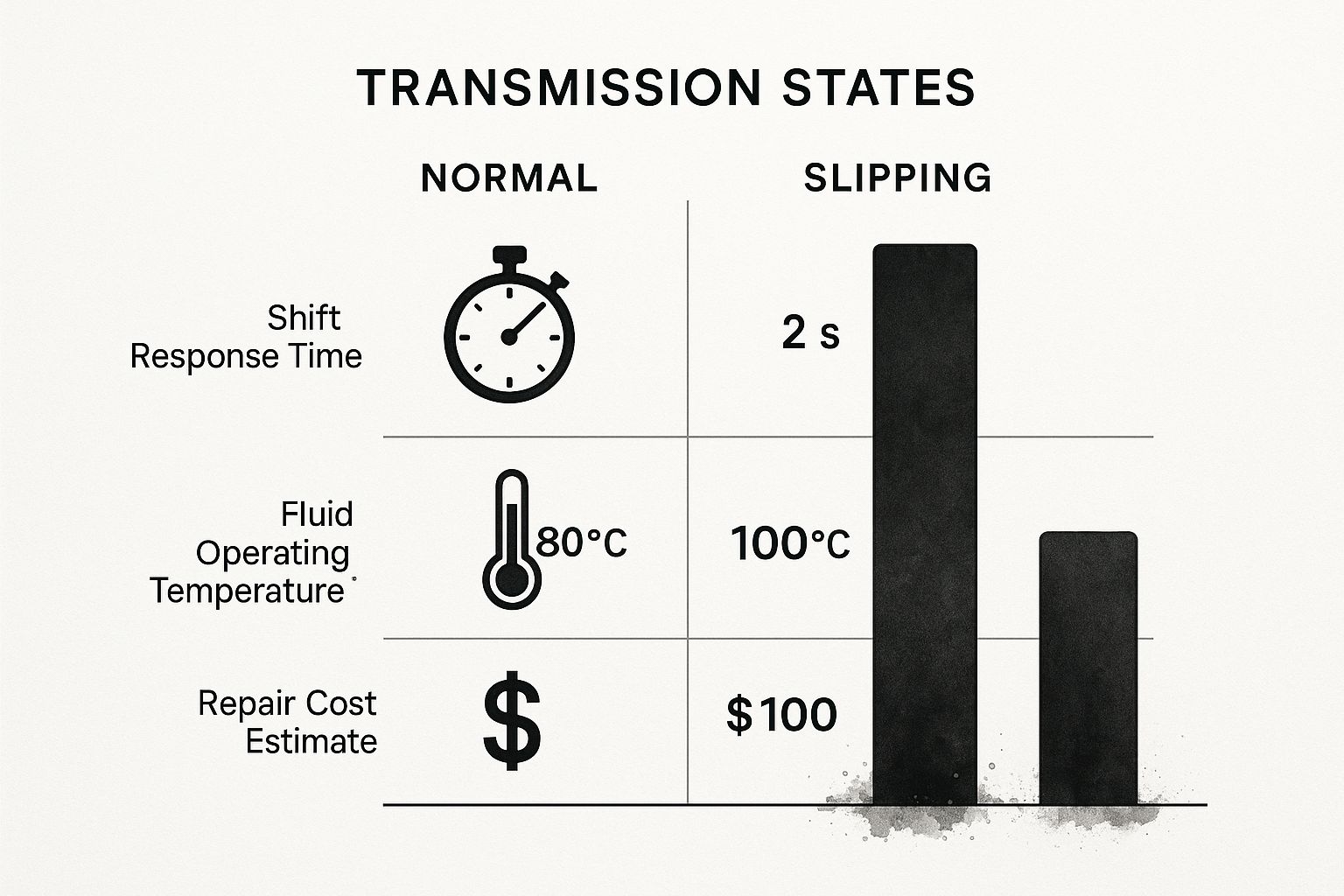
As the infographic shows, a slipping transmission doesn't just affect performance (longer shift times), it also increases operating temperatures and can lead to significantly higher repair costs – potentially $3,000 compared to $100 for preventative maintenance. This highlights the importance of early detection and addressing the underlying causes. If you're creating videos about car maintenance, consider these video marketing tips to ensure your content reaches a wider audience.
Different Transmissions, Different Slipping
Different transmission types – automatic, manual, CVT (Continuously Variable Transmission), and DCT (Dual Clutch Transmission) – exhibit unique slipping characteristics. Modern transmissions, with their complex electronics and computer controls, can present distinct diagnostic challenges compared to older models.
For instance, a faulty sensor in a modern transmission can sometimes mimic the symptoms of mechanical slipping. This complexity is a contributing factor to the increasing demand for specialized transmission repair services. The global transmission repair market, valued at approximately USD 222.96 Billion in 2023, is projected to grow at a CAGR of 3.1% from 2024 to 2030, partially driven by issues like transmission slipping. You can learn more about this growing market in the transmission repair market report.
Understanding the specifics of your transmission type is vital for accurate diagnosis and effective repair. Ignoring these issues can result in significant damage and expensive repairs in the future.
The following table summarizes how slipping can manifest differently across various transmission types, helping you pinpoint your specific issue.
Transmission Types and Their Slipping Characteristics
| Transmission Type | Slipping Symptoms | Common Causes | Risk Level |
|---|---|---|---|
| Automatic | Delayed shifting, engine revving high, decreased fuel efficiency | Low transmission fluid, worn clutch plates, faulty torque converter | High |
| Manual | Grinding gears, difficulty shifting, clutch pedal issues | Worn clutch disc, damaged pressure plate, hydraulic system leaks | Medium |
| CVT | Whining noise, loss of acceleration, overheating | Worn belt or pulley, low CVT fluid, electronic control issues | High |
| DCT | Jerky shifting, hesitation, overheating | Worn clutch packs, faulty mechatronics unit, software glitches | High |
This table highlights the importance of recognizing the specific symptoms associated with each transmission type. While some common causes, such as low fluid levels, can affect multiple types, the specific manifestations of slipping can vary considerably. This reinforces the need for a proper diagnosis to address the root cause effectively. Addressing these problems promptly can prevent further damage and minimize repair costs.
7 Critical Signs Your Transmission Is Slipping
Is your car's transmission giving you trouble? Beyond general performance issues, several specific symptoms point directly to a slipping transmission. Early detection is key to preventing costly repairs and more extensive damage down the line. Let's explore seven critical indicators that your transmission might be slipping.
Slipping Between Gears
One of the most telltale signs of a slipping transmission is the sensation of the car slipping between gears. This often feels like a momentary loss of power, particularly during acceleration. You might notice the engine revving high, but the car doesn't accelerate as expected. This jarring experience indicates a problem with the power transfer within the transmission.
Delayed Gear Engagement
A noticeable delay in gear engagement is another key indicator. Instead of a smooth, instant shift, you'll experience a lag between shifting gears and the transmission's response. This hesitation can occur between any gears, whether shifting up or down, and points to a problem with the transmission's ability to engage properly. This can occur in both automatic and manual transmissions.
Difficulty Staying in Gear
A slipping transmission might also struggle to maintain the selected gear. The car could unexpectedly pop out of gear while driving, forcing you to manually re-engage it. This is a serious safety hazard, especially at higher speeds, and signals a failure within the transmission's mechanism to hold gears securely.
Unusual Noises
A properly functioning transmission operates quietly. A slipping transmission, however, often produces unusual noises, such as whining, humming, or clunking. These sounds can vary in intensity and are often more noticeable during acceleration or gear changes. Any unusual sounds from the transmission require immediate attention.
Burning Smell
A burning smell coming from your car could indicate overheating transmission fluid. This is a serious warning sign. The excessive friction caused by slipping components generates significant heat, which can break down the transmission fluid and produce a distinct burning odor. If you detect this smell, stop driving immediately and have your car inspected by a qualified mechanic.
RPM Spikes Without Acceleration
Another sign of transmission trouble is a sudden increase in engine RPM without a corresponding increase in vehicle speed. This disconnect indicates the engine's power isn't being efficiently transferred to the wheels, a clear sign of transmission slippage.
Check Engine Light
The check engine light can illuminate for many reasons, including transmission problems like slipping. Modern cars use sophisticated On-Board Diagnostics (OBD) systems that can detect transmission issues. If your check engine light comes on, it's crucial to have your car's computer scanned for trouble codes to determine the underlying cause.
To help you better assess the potential severity of transmission slipping symptoms, we've compiled the following guide:
This table categorizes the severity of different transmission slipping symptoms to help readers assess how urgently they need to address their specific issue.
| Symptom | Severity Level | Safe to Drive? | Recommended Action | Potential Damage if Ignored |
|---|---|---|---|---|
| Occasional slight slip between gears | Low | Possibly, but monitor closely | Have a mechanic inspect | Increased wear on transmission components |
| Frequent slipping between gears | Medium | No | Stop driving and seek immediate repair | Severe transmission damage, potential failure |
| Delayed gear engagement | Low to Medium | Possibly, but exercise caution | Have a mechanic inspect | Difficulty shifting, potential transmission damage |
| Difficulty staying in gear | High | No | Stop driving and seek immediate repair | Loss of control, accidents, major transmission damage |
| Unusual noises (whining, humming, clunking) | Medium to High | No | Stop driving and seek immediate repair | Internal damage, potential transmission failure |
| Burning smell | High | No | Stop driving immediately and have towed | Complete transmission failure, potential fire hazard |
| RPM spikes without acceleration | Medium to High | No | Stop driving and seek immediate repair | Transmission damage, potential overheating |
| Check engine light (related to transmission) | Varies | Depends on other symptoms | Have diagnostic codes read and addressed | Varies depending on the underlying issue |
Key takeaway: Promptly addressing any transmission slipping symptoms is essential to prevent more extensive and expensive repairs. While some issues might seem minor initially, ignoring them can lead to significant problems down the road. Consult a qualified mechanic for diagnosis and repair if you experience any of these warning signs.
Why Your Transmission Is Slipping: Root Causes Revealed
A slipping transmission is more than a minor annoyance; it signals potential mechanical problems within your vehicle. Understanding the underlying causes is essential for accurate diagnosis and effective repairs. Let's delve into the inner workings of your transmission and explore the reasons behind slippage.
The Role of Transmission Fluid
Low transmission fluid is a frequent contributor to transmission slippage. This fluid is vital for lubricating the complex components inside the transmission, ensuring smooth gear shifts and power delivery. When fluid levels are low, friction and heat increase, causing the clutches and bands to slip. Think of it like a bicycle chain: a dry chain slips and struggles to transfer power, just as low transmission fluid hinders the smooth transfer of power in your transmission.
Similarly, contaminated or degraded transmission fluid, often identified by a dark color and burnt smell, loses its lubricating properties. This degraded fluid exacerbates slippage, further stressing the transmission components. Regular fluid checks and changes are key to preventing these issues.
Clutch and Band Wear
Beyond fluid-related problems, the clutches and bands inside the transmission are crucial for engaging the gears. These components wear down over time due to constant friction and heat. Eventually, they lose their grip, leading to slippage, particularly noticeable during acceleration or gear changes. This wear is a common cause of slipping, especially in vehicles with high mileage. For more insights on transmission maintenance, check out this helpful resource: How to master your transmission.
Torque Converter Problems
The torque converter, a key component in automatic transmissions, connects the engine to the transmission. Problems within the torque converter, like failing seals or worn components, can disrupt the smooth flow of power, resulting in transmission slippage. This is often accompanied by a noticeable shuddering or vibration during acceleration.
Electronic Control Issues
Modern transmissions rely on sophisticated electronic control systems to manage various functions, including shifting, fluid pressure, and other critical operations. Malfunctioning sensors or software glitches within these systems can disrupt these processes, causing symptoms that mimic mechanical slipping. While less frequent than mechanical issues, electronic problems can be equally disruptive and often require specialized diagnostic equipment for accurate identification.
Driving Habits and Vehicle Design
Aggressive driving, such as rapid acceleration and hard braking, places extra stress on the transmission components, accelerating wear and tear and increasing the likelihood of slippage. Additionally, some vehicle models have inherent transmission weaknesses due to design or manufacturing flaws. These factors can contribute to a higher incidence of transmission problems.

A well-maintained cooling system is also vital for transmission longevity. A malfunctioning cooling system can elevate transmission temperatures, accelerating wear and contributing to slippage. This underscores the importance of regular cooling system maintenance in preventing transmission issues.
The size of the automotive transmission market highlights the prevalence and economic impact of transmission problems. In 2023, the market was valued between USD 43.4 billion and USD 62.4 billion, with projections reaching up to USD 84.2 billion by 2028. This growth, fueled by increased vehicle production and technological advancements, underscores the continued significance of addressing transmission issues like slipping. For detailed market statistics, refer to this report: https://www.marketsandmarkets.com/Market-Reports/automotive-transmission-systems-market-1063.html
DIY Solutions: Fixing Minor Transmission Slipping Issues
Experiencing transmission slippage can be a worrying sign, but not every instance requires an expensive visit to your mechanic. Some minor issues can be resolved at home, potentially saving you a considerable amount of money. This section explores some DIY solutions you can confidently tackle, giving you the power to maintain your vehicle and avoid unnecessary costs.
Checking and Changing Transmission Fluid
One of the most common and easily addressed reasons for minor transmission slipping is low transmission fluid. Similar to engine oil, transmission fluid lubricates the moving parts within your transmission. Insufficient fluid can cause increased friction and heat, eventually leading to slippage. Regularly checking your transmission fluid is a simple but essential maintenance task.
- Locate the dipstick: Your owner's manual will show you where to find the transmission dipstick, usually indicated by a brightly colored handle.
- Check the fluid: With the engine running and the car in park, remove the dipstick, wipe it clean, reinsert it completely, and then remove it again to get an accurate reading.
- Read the level: The dipstick has markings that show the proper fluid level. If the fluid level is low, add the correct type of transmission fluid as specified in your owner's manual. Overfilling can also be problematic, so add the fluid gradually, checking the level frequently.
If the fluid appears dark, has a burnt smell, or contains metallic particles, it suggests more significant problems that require professional attention. However, if the fluid is simply low and otherwise looks good, adding more might solve the slipping issue.
Addressing Fluid Degradation
Even with a sufficient transmission fluid level, the fluid itself can degrade over time. Degraded fluid loses its lubricating qualities and may contribute to transmission slippage. For instance, fluid that resembles burnt coffee and has a sharp, acrid smell needs to be changed. Changing the transmission fluid is a relatively straightforward process that many car owners can do themselves:
- Gather your supplies: You'll need the correct transmission fluid, a drain pan, a wrench, and a new filter (if your vehicle requires one).
- Drain the old fluid: Locate the transmission drain plug (refer to your owner's manual) and carefully drain the old fluid into the drain pan.
- Replace the filter: If your vehicle has a transmission filter, this is the time to replace it with a new one.
- Add new fluid: Add the recommended amount and type of transmission fluid, making sure not to overfill.
- Check for leaks: Once the new fluid is added, check for leaks around the drain plug and other connections.
Changing the transmission fluid can sometimes fix minor slipping problems, especially those stemming from fluid degradation. Find maintenance coupons for transmission service here.
Debunking Transmission Additives
Many aftermarket transmission additives claim to fix slipping, but a lot of them are ineffective and can even be harmful. While some high-quality additives might offer temporary improvement, they aren’t a long-term solution for mechanical issues. Always refer to your owner's manual or consult with a trusted mechanic before using any transmission additives.
Knowing Your Limits: When DIY Isn't Enough
While these DIY solutions can address minor transmission slipping, it's important to understand their limitations. If the slipping continues or gets worse after checking and changing the fluid, it signifies a more serious underlying issue that needs professional diagnosis and repair. Trying to perform more complex repairs without the proper skills and tools can cause further damage and result in much higher repair costs down the line.
When to Call the Professionals for Transmission Slipping
While some minor transmission issues can be resolved with simple DIY fixes, certain problems signal the need for professional help. Knowing when an issue surpasses your capabilities can prevent wasted time, unnecessary expenses, and further damage to your vehicle. Let’s explore these critical indicators.
Recognizing Your Limits
One obvious sign you need professional assistance is persistent transmission slipping, even after performing basic maintenance like checking and changing the transmission fluid. If the slipping continues, gets worse, or occurs alongside other symptoms like strange noises or a burning smell, it’s crucial to consult an expert. These accompanying symptoms often indicate internal damage requiring specialized tools and expertise.
For instance, imagine changing your transmission fluid, only to find the car still slips between gears. This suggests a more complicated mechanical problem, likely exceeding the scope of DIY repairs. Continuing to drive in this condition can exacerbate the issue and lead to potentially more expensive repairs later.
Professional Diagnostic Tools and Expertise
Professional transmission shops utilize advanced diagnostic equipment not typically available to car owners. This specialized equipment allows technicians to precisely identify the root cause of the slipping, which is vital for efficient and effective repairs. Computer-based transmission analysis, for example, can reveal electronic control problems or internal malfunctions invisible to the naked eye. This diagnostic accuracy ensures appropriate repairs and avoids unnecessary guesswork.
Furthermore, transmission specialists possess the experience and knowledge required to interpret the data provided by these diagnostic tools. They understand the complexities of various transmission types and can differentiate between seemingly similar symptoms that may have distinct underlying causes.
Effective Communication With Repair Shops
Clear communication with repair shops is essential for a successful repair experience. Describe the problem in detail. Include when the slipping happens (for example, during acceleration, shifting, or at certain speeds), any accompanying sounds, and any recent maintenance performed. This detailed information assists the technician in understanding the issue and making a proper diagnosis.
Don’t hesitate to ask questions. A qualified transmission specialist should explain the diagnostic process, recommended repairs, and associated costs in a straightforward manner. This transparency fosters trust and empowers you to make well-informed decisions about your vehicle’s repair.
Red Flags to Watch Out For
When selecting a transmission shop, beware of certain red flags. If a shop avoids answering your questions or providing a clear explanation of the needed repairs, it may indicate a lack of expertise. Likewise, unusually low prices could suggest the use of subpar parts or hasty workmanship. Opt for a reputable shop with experienced technicians to ensure a high-quality repair.
Warranty Considerations and Manufacturer Quirks
When dealing with transmission issues, consider your warranty coverage. Some warranties stipulate that repairs be carried out by certified technicians to remain valid. Additionally, be aware of any manufacturer-specific transmission peculiarities or common problems associated with your car model. This knowledge proves beneficial for both diagnosis and repair.
Preparing for Repair Costs
Transmission repairs can be expensive, so financial preparation is crucial. Discuss estimated costs with the repair shop upfront and explore available payment options. Understanding potential expenses allows you to make informed decisions and avoid unexpected financial strain. This preparation also helps you negotiate a fair price and select the best repair option for your budget and vehicle’s specific needs.
Transmission Repair Options: Costs, Approaches & Decisions
Experiencing problems with a slipping transmission can be a significant concern for any car owner. The prospect of costly repairs can be daunting. This section provides a clear overview of transmission repair options, associated costs, and practical advice for making informed decisions.
Understanding Your Repair Options
Several approaches are available to address a slipping transmission, ranging from simple maintenance to complete replacements.
-
Fluid Service: This involves checking and changing the transmission fluid, often including a new filter. This is the most affordable option and can sometimes resolve slipping issues stemming from low or dirty fluid.
-
Transmission Band Adjustment: Sometimes, adjusting the transmission bands can correct the problem. This is a relatively minor repair compared to more involved internal work.
-
Clutch or Band Replacement: Worn or damaged clutches or bands inside the transmission may require replacement. This is a more labor-intensive process than a fluid service or band adjustment.
-
Transmission Rebuild: A rebuild involves completely disassembling the transmission, inspecting every component, replacing worn or damaged parts, and then reassembling the unit. This is a comprehensive and more expensive repair.
-
Remanufactured Transmission: This involves replacing the entire transmission with a remanufactured unit. While this is often the priciest option, it can offer a longer-term solution, particularly for older vehicles.
Factors Influencing Repair Costs
Several factors contribute to the overall cost of transmission repair.
-
Type of Repair: As discussed, a simple fluid service is significantly less expensive than a full rebuild or replacement.
-
Vehicle Make and Model: The complexity and cost of transmissions differ among vehicle makes and models.
-
Labor Rates: Labor costs can vary based on location and the specific repair shop.
-
Parts Quality: Choosing high-quality replacement parts can lead to a more reliable and durable repair, but may involve a higher initial cost.
A fluid service might cost between $100 and $300, while a transmission rebuild could range from $1,500 to $3,500 or more. A remanufactured transmission replacement can potentially cost upwards of $4,000. For tips on managing car maintenance expenses, check out this resource: How to master your car maintenance budget.
Making Informed Decisions
Consider these key factors when deciding on a transmission repair:
-
Vehicle Age and Value: For older vehicles with lower resale value, a less expensive repair might be the most sensible option. A more comprehensive repair could be a worthwhile investment for newer vehicles.
-
Warranty Coverage: Check your vehicle's warranty, as it might cover some or all of the repair costs.
-
Repair Shop Reputation: Select a reputable repair shop with experienced transmission specialists.
Negotiating and Evaluating Repair Quotes
Obtain multiple quotes from different repair shops. Compare these quotes, noting the recommended repairs, parts used, total cost, and any warranties offered. This allows you to negotiate a fair price and choose the best option for your situation. Being proactive in this process can save you a substantial amount of money. By understanding your repair options, associated costs, and how to make sound decisions, you can confidently address the challenges of a slipping transmission.
Preventing Car Transmission Slipping: Expert Maintenance Secrets
A slipping transmission can be a costly problem, but proactive maintenance can prevent many issues. This section reveals expert secrets to a smooth-running transmission and avoiding expensive repairs.
The Importance of Regular Maintenance
Like any complex machine, your car's transmission needs regular care. Consistent maintenance is much more affordable than major repairs. Think of it like brushing your teeth daily to avoid major dental work. Similarly, a preventative maintenance schedule for your transmission can save you thousands of dollars.
-
Check Your Fluid Regularly: Transmission fluid is essential. Low levels or fluid that's dark and smells burnt signal potential problems. Checking and topping off fluid is a simple but crucial step.
-
Follow Your Owner's Manual: Your owner's manual provides manufacturer-recommended maintenance intervals. Following these guidelines ensures proper care at the right time.
-
Address Small Issues Promptly: Ignoring minor issues like occasional slippage or unusual noises can lead to bigger, more expensive problems. Addressing these early warning signs is key.
Driving Habits That Extend Transmission Life
Your driving habits directly impact your transmission's health. Aggressive driving, like rapid acceleration and hard braking, stresses the transmission components. Smoother driving can significantly extend its lifespan.
-
Avoid Sudden Acceleration and Braking: Smooth acceleration and gradual braking reduce wear and tear, promoting longevity.
-
Use the Correct Gear for the Situation: Driving in a lower gear than necessary, especially when towing or hauling, strains the transmission. Choose the right gear for the conditions.
-
Don't Ride the Brakes: Riding the brakes creates excessive heat, damaging transmission fluid and internal components.
The Cooling System Connection
The cooling system and transmission are interconnected. A faulty cooling system can elevate transmission temperatures, degrading fluid and increasing the risk of slipping. Regular cooling system maintenance, including coolant flushes and checks, is crucial for protecting your transmission. This prevents overheating and ensures optimal operating temperature. You might be interested in: How to master your vehicle maintenance.
Modern vs. Older Transmissions
Modern transmissions, often with complex electronics and computer controls, require different maintenance than older ones. Transmission software updates from manufacturers can sometimes resolve shifting issues and improve performance. Staying informed about and performing these updates is beneficial.
Transmission Flushes: Proceed With Caution
Transmission flushes, while sometimes helpful, can be detrimental, especially for older, high-mileage vehicles with neglected maintenance. A flush can dislodge debris plugging leaks, potentially causing further problems. Consult a trusted mechanic before getting a transmission flush.
Maintaining High-Mileage and Extreme Condition Vehicles
Vehicles used in extreme conditions, such as frequent towing or off-roading, require more frequent transmission service. Increased stress and heat necessitate a tailored maintenance schedule to prevent premature wear and tear. If you are on a budget, there are different types of affordable SEO plans, which can help you to better understand prices.
By following these maintenance tips, you can significantly reduce the risk of transmission problems and extend its life. Regular checks, good driving habits, and attention to your cooling system can save you thousands on repairs. Schedule your transmission service at Express Lube and Car Care today for a smooth-running car for years to come.