
Finding a trustworthy mechanic feels harder than it should be. You have no shortage of options when searching for the best auto repair near me, yet a single bad choice can cost you hundreds of dollars in unnecessary repairs or leave a real problem unresolved. Neighborhood auto repair shop evaluation, known more formally in the industry as shop selection due diligence, is the process of systematically vetting a local shop before you hand over your keys. Done right, it removes the guesswork, protects your budget, and connects you with a shop that genuinely works in your interest.
Table of Contents
- Key Takeaways
- Neighborhood auto repair shop evaluation: starting points
- On-site evaluation: what to look for in person
- Comparing price quotes and reading estimates clearly
- Communication and follow-up as trust signals
- Common evaluation mistakes that cost drivers money
- Our take on trust and transparency in 2026
- Why Express Lube & Car Care makes this easier
- FAQ
Key Takeaways
| Point | Details |
|---|---|
| Certifications matter most | Prioritize ASE-certified technicians and BBB accreditation as your first filter when shortlisting shops. |
| Written estimates are non-negotiable | Demand itemized breakdowns separating parts, labor, and fees before authorizing any work. |
| Review patterns beat star ratings | Look for repeated themes of honesty and fair pricing across reviews, not just the overall score. |
| Transparency starts at first contact | How a shop answers your first phone call tells you more than any online rating. |
| Warranties reveal commitment | A shop that stands behind its work with at least 12 months or 12,000 miles of warranty coverage is signaling real confidence in its quality. |
Neighborhood auto repair shop evaluation: starting points
Before you visit a single shop, you need a short list built on verifiable facts rather than guesswork. The auto repair industry uses a few reliable trust indicators you can check from your phone in less than 20 minutes.
Certifications and accreditation are your first filter. Look for shops staffed by ASE (Automotive Service Excellence) certified technicians. ASE certification means a technician has passed standardized exams and demonstrated real competence in specific repair categories. Mercury Insurance advises checking technician certification alongside BBB accreditation and complaint history as the baseline reliability indicators for any shop you consider.
- Check the shop’s BBB profile for complaint volume, resolution patterns, and accreditation status.
- Search Google, Yelp, and Facebook for at least 15 to 20 reviews per shop.
- Note how management responds to negative reviews, not just whether the reviews exist.
- Ask friends, coworkers, or neighbors for referrals. Trusted auto repair ratings from people who have personally used a shop are still among the most reliable signals available.
- Look for RepairPal certification, which independently verifies a shop’s pricing and quality standards.
When it comes to local auto repair reviews, your goal is pattern recognition, not score averaging. Review language consistency and repeatable themes of honesty and fair pricing are stronger predictors of shop reliability than star ratings alone. A shop with 200 reviews averaging 4.3 stars, where dozens of reviewers specifically mention honest communication, is a far safer bet than one with a 4.8 average built on 12 reviews.
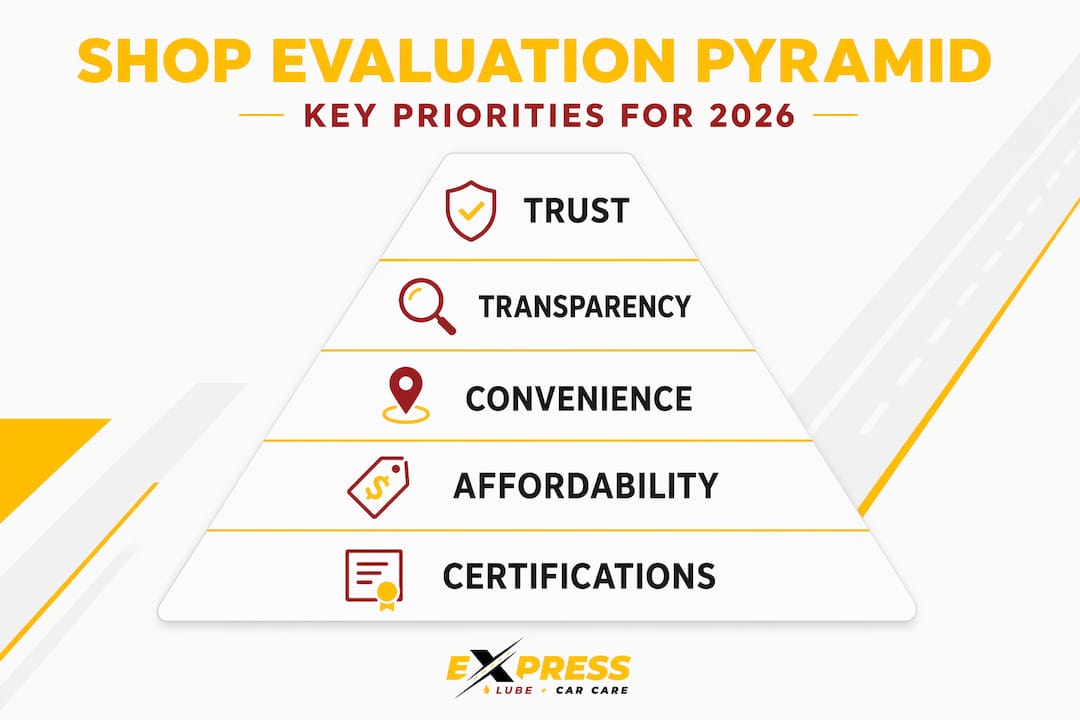
Consumer priorities have also shifted in 2026. Cost and affordability now play a larger role alongside convenience in how drivers choose aftermarket auto service, according to JD Power’s 2026 Aftermarket Service Index study. Knowing this helps you frame your evaluation: you are not just looking for cheap, and you are not just looking for fast. You want the shop that delivers fair pricing AND a convenient, positive experience.
Pro Tip: When reading reviews, filter specifically for mentions of “estimate,” “surprise charge,” or “they called me before.” These phrases reveal exactly how a shop handles the moments that break trust.
On-site evaluation: what to look for in person
A shortlist built on research is useful. An in-person visit turns that list into a confident decision. Neighborhood mechanic comparison only gets meaningful when you show up and pay attention to what you see and hear.
Here is a step-by-step process for your shop visit:
- Observe the shop environment. A reasonably clean, organized shop signals professionalism. You do not need a sterile operating room. You do need to see labeled parts, organized bays, and equipment that looks maintained and in use.
- Note your first interaction. How does the service advisor greet you? A shop worth your business will answer your first question directly and clearly, without deflecting or upselling you before they even know your problem.
- Request a written estimate before approving anything. This is not optional. A reliable shop provides a written, itemized estimate that separates parts, labor, shop supplies, and applicable taxes. Auto repair shop checklists recommend written estimates with clear warranty terms, typically 12 months or 12,000 miles on parts and labor, as a baseline standard.
- Ask about warranties directly. “What warranty do you provide on parts and labor?” is a simple question. Vague or uncomfortable answers are a serious warning sign.
- Ask to see worn or failed parts. Reputable shops keep the removed parts to show you. Seeing the actual failed component makes the repair feel real and justified. Shops that can not or will not show you the evidence deserve skepticism.
- Watch for pressure tactics. Any push for same-day approval on a large, unexpected repair without time to review the estimate is a red flag. Trustworthy shops give you the information and the space to decide.
Pro Tip: Ask the service advisor to explain the repair in plain language. Their answer tells you two things at once: whether they understand the problem clearly, and whether they respect your ability to understand it too.
Comparing price quotes and reading estimates clearly
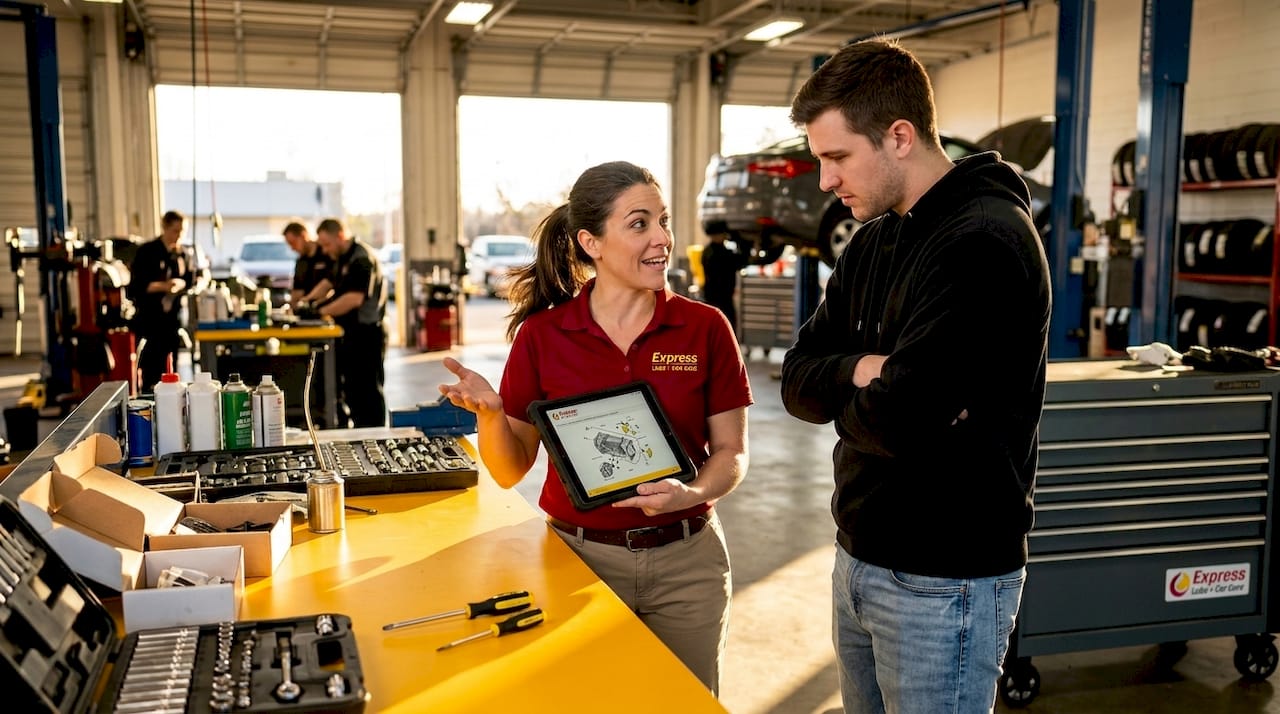
Getting multiple estimates is smart practice, but comparing them incorrectly wastes your time and can lead you to the wrong shop. The goal of a neighborhood auto repair shop comparison is not to find the lowest number. It is to find the most transparent and complete breakdown.
Understanding parts quality in your estimate
Every estimate should specify whether parts are OEM (Original Equipment Manufacturer), OEM-equivalent, or aftermarket. OEM parts are made by your vehicle’s manufacturer. OEM-equivalent parts meet the same specifications but come from a third party. Aftermarket parts vary widely in quality. An itemized estimate that clearly separates parts, labor, supplies, and taxes is the only valid basis for comparing two shops on price.
| Estimate component | What to check |
|---|---|
| Parts line item | OEM vs. aftermarket clearly labeled, with cost per part |
| Labor rate | Hours estimated per repair task, stated hourly rate |
| Diagnostic fee | Whether it is credited toward repair cost if you proceed |
| Shop supplies/fees | Itemized, not lumped into a vague “miscellaneous” category |
| Warranty terms | Months and mileage stated in writing, not verbally |
A few common pricing mistakes to avoid:
- Choosing a shop purely because their quote is $50 lower, without checking whether they are using inferior parts or skipping a needed step.
- Confusing a diagnostic fee with repair authorization. Agreeing to a diagnosis does not obligate you to repair at that shop.
- Ignoring supplement disclosures. If additional damage is discovered mid-repair, a trustworthy shop calls you before proceeding. Shops that handle supplements transparently communicate the change, explain why, and get your approval in writing.
Learning to verify repair estimates before signing off is one of the most practical skills a car owner can build.
Communication and follow-up as trust signals
A shop’s communication style is one of the clearest neighborhood auto shop trust indicators you will find, and most drivers undervalue it until something goes wrong.
- Text vs. phone preference. Ask upfront how the shop contacts you with updates. A shop that matches your preferred communication method respects your time and reduces missed messages.
- Photo and video documentation. Shops that send photos or short videos of the failed component before repair approval are demonstrating real transparency. Digital communication with visuals more than doubles customer likelihood to approve recommended repairs, which means the shops using it are building a faster, more confident relationship with their customers.
- Proactive delay updates. If a part is backordered or a repair runs longer than expected, a trustworthy shop calls you before you call them. Silence during a repair is not a good sign.
- Post-service follow-up. A shop that checks in after the repair to confirm the issue is resolved is one worth returning to. That follow-up is not just good service. It is evidence that they stand behind what they did.
This aligns with trust built through affordability and experience factors like convenient scheduling and clear communication, which car service shop ratings increasingly reflect in 2026.
Common evaluation mistakes that cost drivers money
Even careful shoppers make predictable errors during shop selection. Here is what to watch for:
- Choosing on price alone. The cheapest estimate often reflects the cheapest parts or a shortcut somewhere in the process. Warranty coverage, parts quality, and technician experience all factor into real value.
- Ignoring pressure for immediate approval. Checklists advise second opinions for expensive unexpected repairs and stress written documentation. Any shop that pushes you to approve a large repair on the spot, before you have had time to review the estimate, deserves a pause.
- Accepting verbal promises. If a warranty, a price guarantee, or a timeline is not in writing, it effectively does not exist. Get everything documented.
- Skipping follow-up documentation. Keep your estimate, your invoice, and any communication records. If a dispute arises or a repair fails under warranty, documentation is the only thing that protects you.
“Transparency is not a sales tactic. It is a discipline practiced at every touchpoint, from the first phone call to the final invoice.” (Body Shop Business, 2026)
When a mid-repair estimate changes, ask the shop to stop, document what they have found, and walk you through the new scope before any additional work begins. A reputable shop will not hesitate.
Our take on trust and transparency in 2026
I have watched the way drivers relate to auto repair shops shift noticeably over the past few years. What I keep seeing is that the shops earning the most loyalty are not necessarily the fastest or the cheapest. They are the ones who treat transparency as a discipline rather than a tactic.
In my experience, transparency at first contact changes everything. When a driver calls with a concern and gets a calm, honest answer, even if that answer is “we need to see it before we can tell you,” they arrive at the shop already more relaxed and more ready to trust the diagnosis. That first phone call is not small talk. It is the beginning of the entire relationship.
What I have also learned is that cost concerns and trust concerns are connected. When affordability is a real stress for a driver, any hint of a surprise charge or vague estimate feels like a betrayal. Shops that itemize clearly and explain every line are not doing extra work. They are removing the fear that makes car repair feel like a gamble. At Express Lube & Car Care, that is exactly the standard we hold ourselves to, from the first interaction to the final invoice.
— Express Lube & Car Care
Why Express Lube & Car Care makes this easier
Doing a thorough shop evaluation takes real effort, and we know not every driver has the time or confidence to work through every step alone. At Express Lube & Car Care in Haltom City, the evaluation process is simpler because the answers to the hard questions are already clear.
Our ASE-certified technicians bring verified expertise to every service, from routine oil changes to complex repairs. We provide written, itemized estimates before any work begins, and our RepairPal certification means our pricing is independently verified as fair. No appointments are needed, so you can stop in when it works for you. Warranties are included on parts and labor so you leave with real peace of mind. If you want to explore what trusted auto repair in the DFW area actually looks like in practice, or if you need engine diagnostics from a team that will show you what they find and explain it clearly, we are ready when you are.
For more guidance on car care decisions and choosing local shops nearby, visit the Express Lube & Car Care blog.
FAQ
What are the most important things to check when evaluating a local auto repair shop?
Look for ASE-certified technicians, BBB accreditation, written itemized estimates, and warranty terms on parts and labor. Consistent positive review themes around honesty and communication are strong reliability signals.
How do I compare price quotes from different shops fairly?
Compare only itemized estimates that separate parts, labor, diagnostic fees, and shop supplies. Confirm whether parts are OEM or aftermarket, since that distinction directly affects both price and durability.
What are the biggest red flags at a neighborhood mechanic?
Pressure for same-day approval on large repairs, vague or verbal-only estimates, and refusal to show you removed parts are the clearest warning signs. Walk away from any shop that can not answer a direct question about warranty coverage.
How do online reviews factor into shop selection?
Focus on repeated themes across at least 15 to 20 reviews rather than overall star ratings. Consistent mentions of honest communication and fair pricing are more meaningful than a 5-star average built on a small number of reviews.
Does it matter if a shop offers no-appointment service?
Yes, especially for routine maintenance and urgent issues. No-appointment availability reduces the friction of getting car care done on your schedule, and shops that offer it tend to score higher on convenience in car service shop ratings.